
If you’re investing in link building and still evaluating websites based only on Domain Rating or Authority Score, you’re playing an outdated game.
Search has changed.
It’s no longer just about ranking in Google. It’s about being cited, referenced and surfaced in AI-driven search environments.
At Impacto, we approach backlinks as part of a broader AI visibility strategy. If a site cannot strengthen brand authority across search and AI systems, it’s not worth the investment.
This article breaks down exactly how we evaluate backlink opportunities before placing a single link.
We’ll use a SEMrush example, but the same framework applies in Ahrefs. The metrics have different names, but the logic is identical.
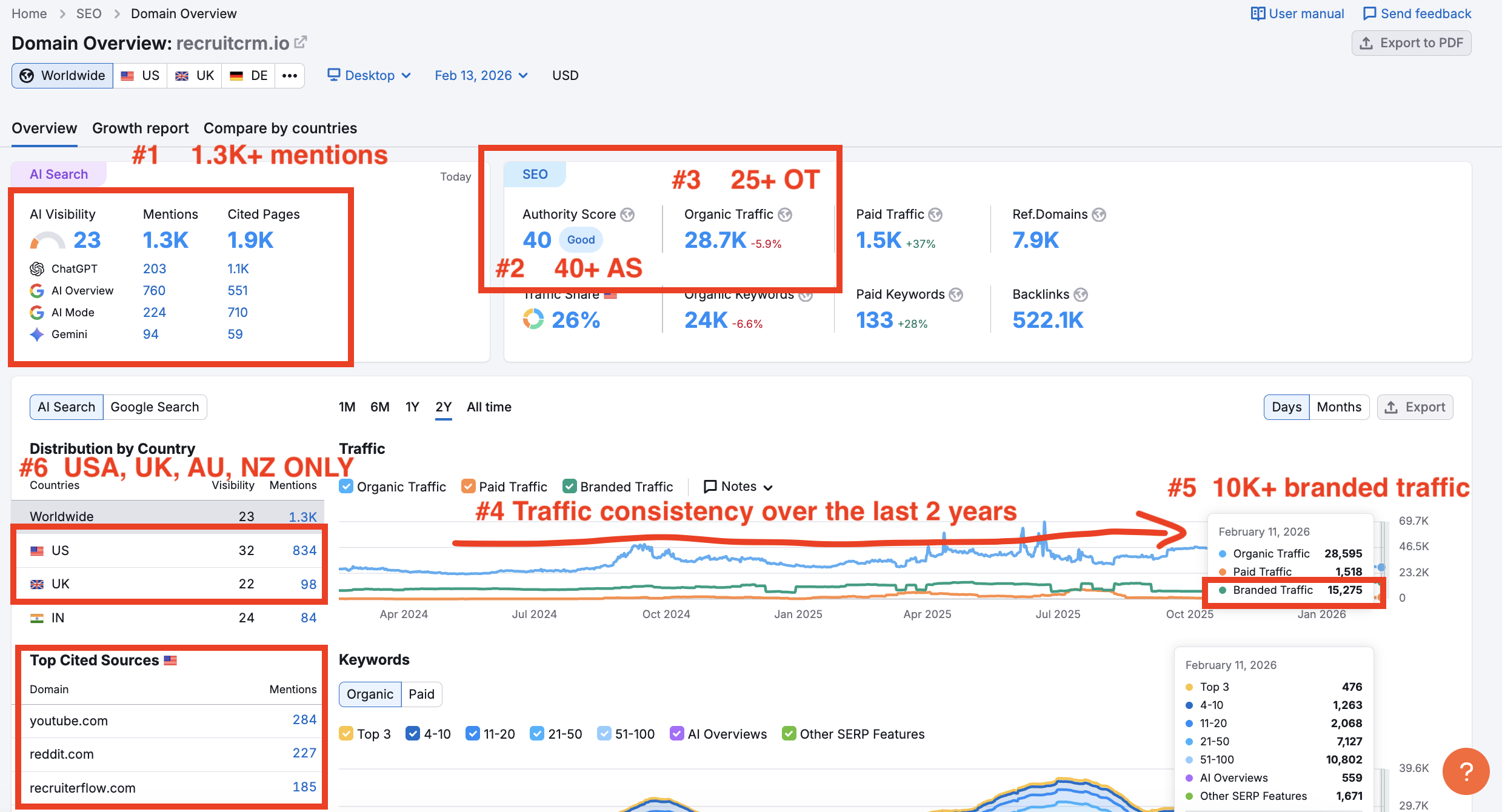
In one screen, we’re looking at:
This first overview usually tells us whether the site is worth deeper analysis.
Now let’s break each one down.
Our rule: 30+ minimum.
Below 30 is high risk.
But Authority Score alone means very little. A DR60 site can still be weak if:
Authority is a filter, not a decision-maker.
In Ahrefs, this maps to Domain Rating. The name changes, the logic doesn’t.
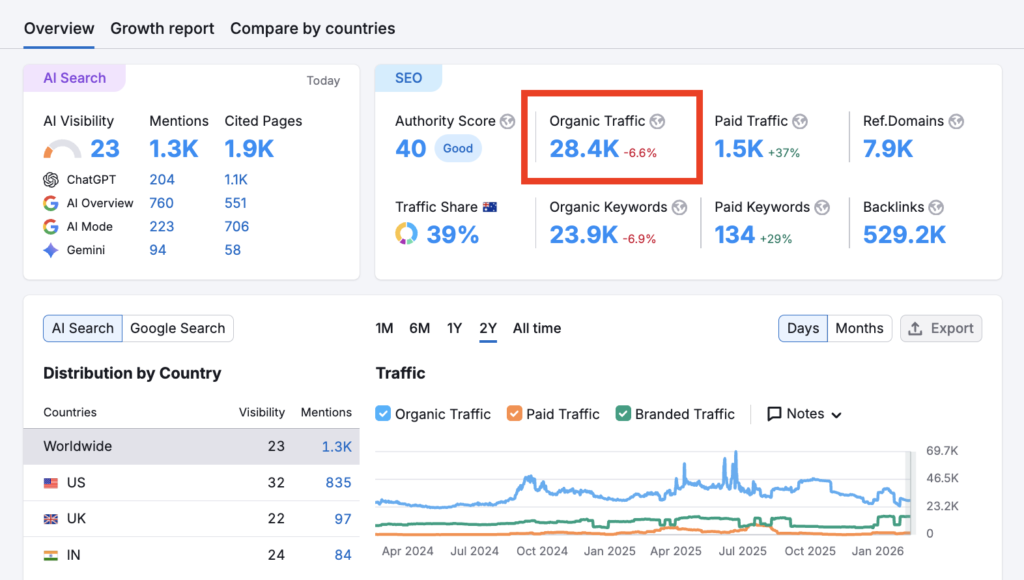
Our rule:
Traffic alone can be manipulated. We’ve seen sites inflated for 6–12 months, then wiped out during a core update.
Which is why volume is less important than consistency.
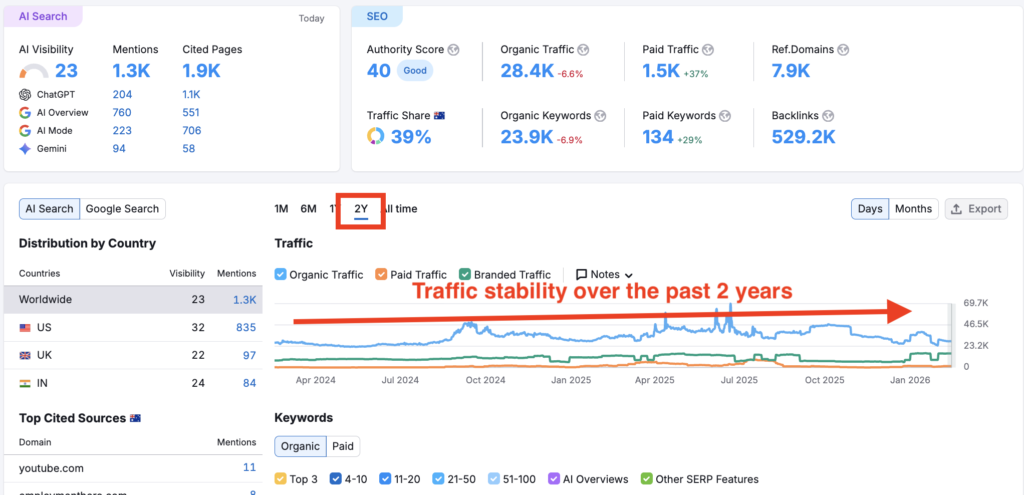
This is one of the most underrated signals.
We look at:
If traffic jumped 300% in three months and then collapsed, that’s not authority. That’s engineered SEO.
Those are often sites built primarily for selling links.
And when they drop, your backlink sits on a declining asset.
Traffic stability protects your investment.
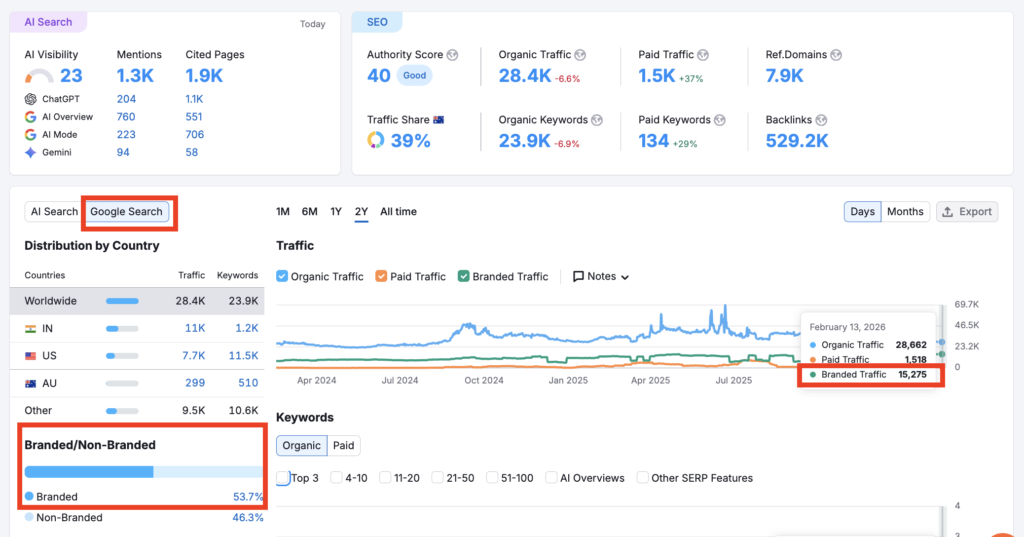
This is where most marketers get it wrong.
Branded traffic tells you:
We also look beyond search tools:
A site with 50k traffic and zero brand demand is weaker than one with 15k traffic and strong brand presence.
Branded demand is resilience.
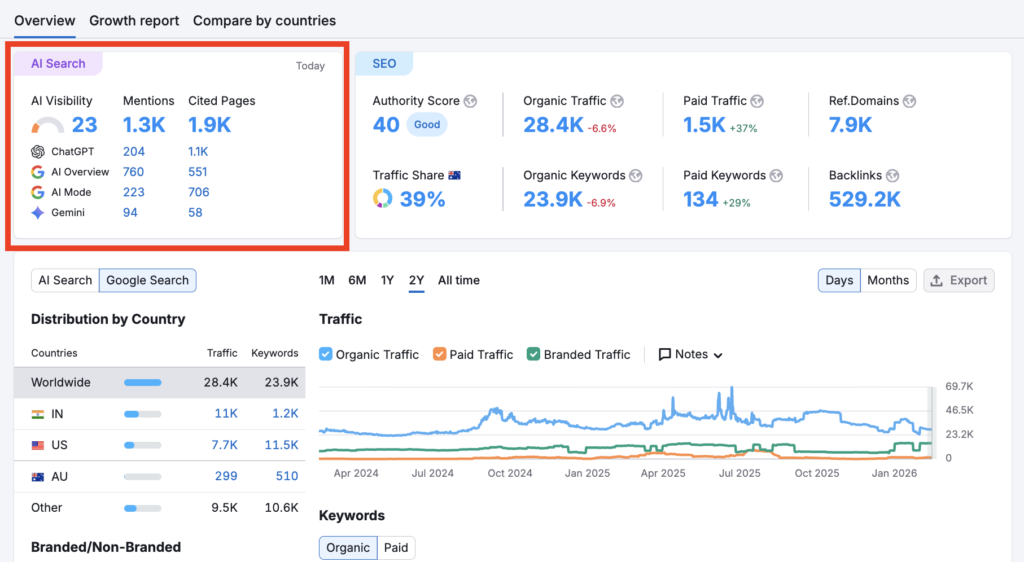
Our rule:
Why?
AI systems surface and cite sources. If a domain is already referenced across AI-driven environments, it signals:
We don’t treat this as a ranking factor. We treat it as a forward-looking authority signal.
Search is evolving. Backlinks should reflect that.
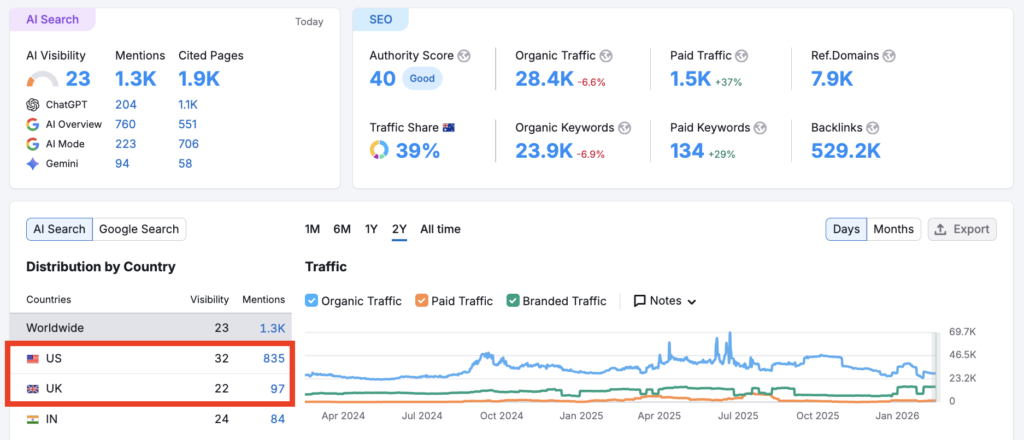
For NZ or Australian clients:
If 80% of traffic comes from India and your audience is New Zealand business owners, the relevance weakens.
Geographic mismatch reduces real influence.
We reject domains when we see:
This is common in blogs built purely to sell placements.
When Google updates hit, they disappear. And your link goes with them.
If irrelevant → reject immediately
Weighted evaluation:
This keeps decisions strategic instead of emotional.
We use SEMrush because organic traffic estimates tend to align more closely with what we see in Search Console.
However, Ahrefs works perfectly well for this framework.
You’re analysing:
The tool matters less than the interpretation.
Backlinks are not just ranking tools anymore.
They are:
If you treat link buying as a DR acquisition game, you will eventually invest in decaying domains.
If you treat it as authority acquisition, you build resilience.
Before approving a placement, confirm:
If more than two of these fail, reconsider the investment.
Kia ora, we’re Impacto. Contact us now to help you grow your business.
